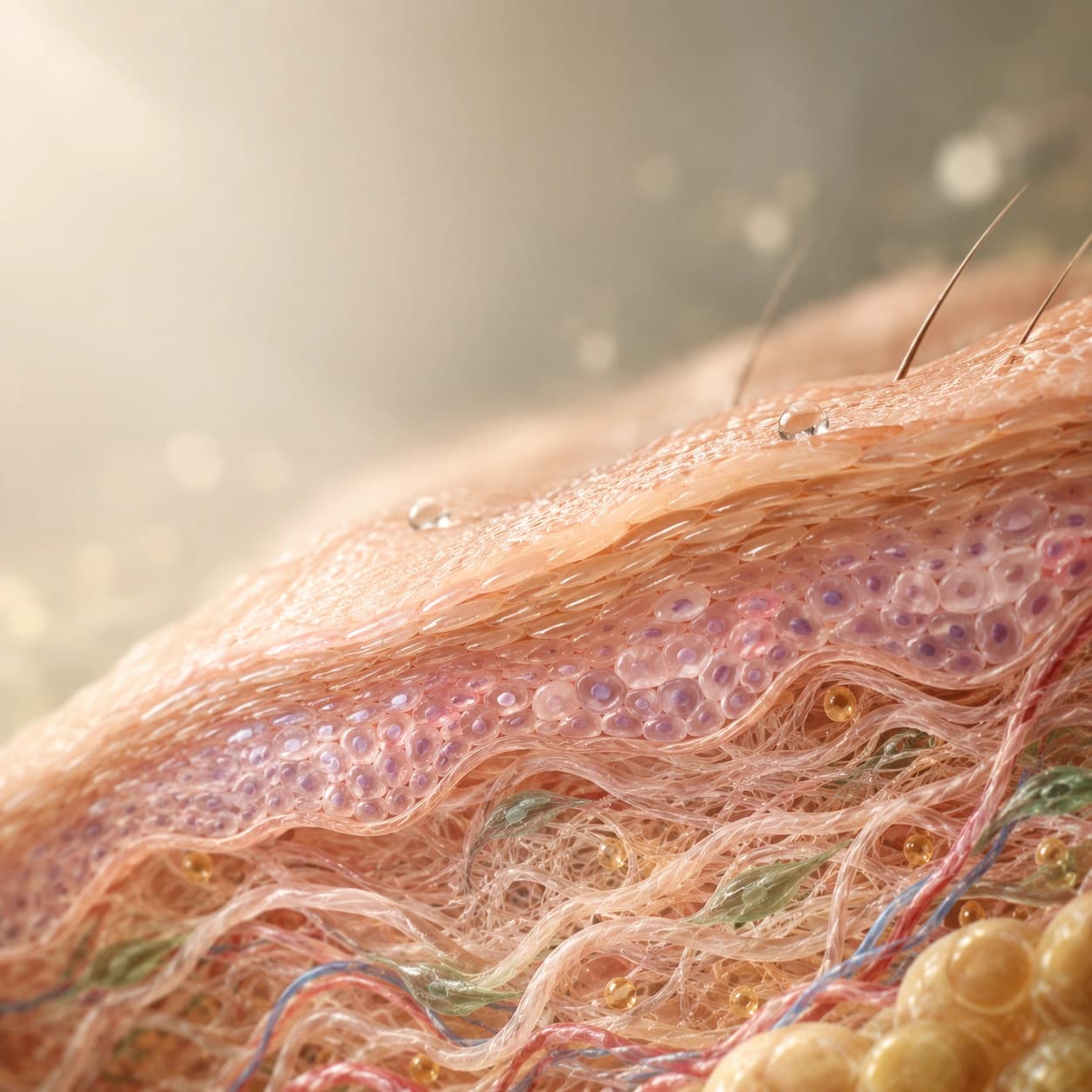
Skin health is influenced by a complex interplay of nutritional factors. While individual ingredients often receive focused attention, understanding the broader nutritional context provides a more complete picture.
Nutritional Foundations
Skin requires multiple nutrients for normal structure and function:
Proteins and Amino Acids - Collagen synthesis requires glycine, proline, and hydroxyproline - Keratin production depends on sulfur-containing amino acids - Glutathione synthesis requires glutamate, cysteine, and glycine
Vitamins **Fat-Soluble:** - Vitamin A: Epithelial cell differentiation and turnover - Vitamin D: Skin barrier function and immune regulation - Vitamin E: Antioxidant protection - Vitamin K: Involved in various skin processes
- **Water-Soluble:**
- Vitamin C: Collagen synthesis and antioxidant defense
- B vitamins: Energy metabolism and cellular function
- Biotin: Supports normal skin, hair, and nail health
Minerals - Zinc: Wound healing and enzyme function - Copper: Collagen cross-linking - Selenium: Antioxidant enzyme cofactor - Iron: Oxygen delivery and enzyme function
Essential Fatty Acids - Omega-3 and omega-6 fatty acids contribute to cell membrane structure and inflammatory modulation
Beyond Individual Nutrients
Nutrition affects skin through multiple pathways:
Systemic Effects Nutritional status influences: - Overall health and metabolic function - Inflammatory status - Hormonal balance - Immune function - Oxidative stress burden
Barrier Function Adequate nutrition supports: - Lipid barrier formation - Proper cell differentiation - Moisture retention - Protection against environmental stressors
Cellular Function Nutrients provide: - Energy substrates - Biosynthetic precursors - Cofactors for enzymatic reactions - Signaling molecules
Nutritional Deficiencies and Skin
- Various nutritional deficiencies can manifest in skin:
- Vitamin C deficiency: Impaired wound healing, skin fragility
- Vitamin A deficiency: Follicular hyperkeratosis
- Essential fatty acid deficiency: Scaling and dermatitis
- Protein deficiency: Impaired healing, edema
- Zinc deficiency: Delayed wound healing, various skin lesions
Hydration
- Water intake and overall hydration status affect:
- Skin moisture content
- Barrier function
- Appearance and texture
While topical hydration is important, systemic hydration status also plays a role.
Individual Variation
- Nutritional requirements and responses vary significantly:
- Genetic factors influence nutrient metabolism
- Age affects absorption and utilization
- Health status impacts requirements
- Lifestyle factors modify needs
- Environmental exposures change demands
The Holistic Perspective
- Optimal skin nutrition involves:
- Adequate overall caloric intake
- Balanced macronutrient distribution
- Diverse micronutrient intake
- Appropriate hydration
- Consideration of individual factors
Single-nutrient supplementation may be valuable in specific contexts, but comprehensive nutritional adequacy provides the foundation for skin health.
Clinical Implications
- For healthcare professionals, understanding skin nutrition means:
- Assessing overall nutritional status
- Considering multiple nutritional factors simultaneously
- Recognizing that skin is one reflection of overall health
- Integrating nutritional approaches with other interventions
- Managing patient expectations realistically
Nutrition represents one important pillar of skin health, working alongside genetics, topical care, sun protection, lifestyle factors, and medical considerations.