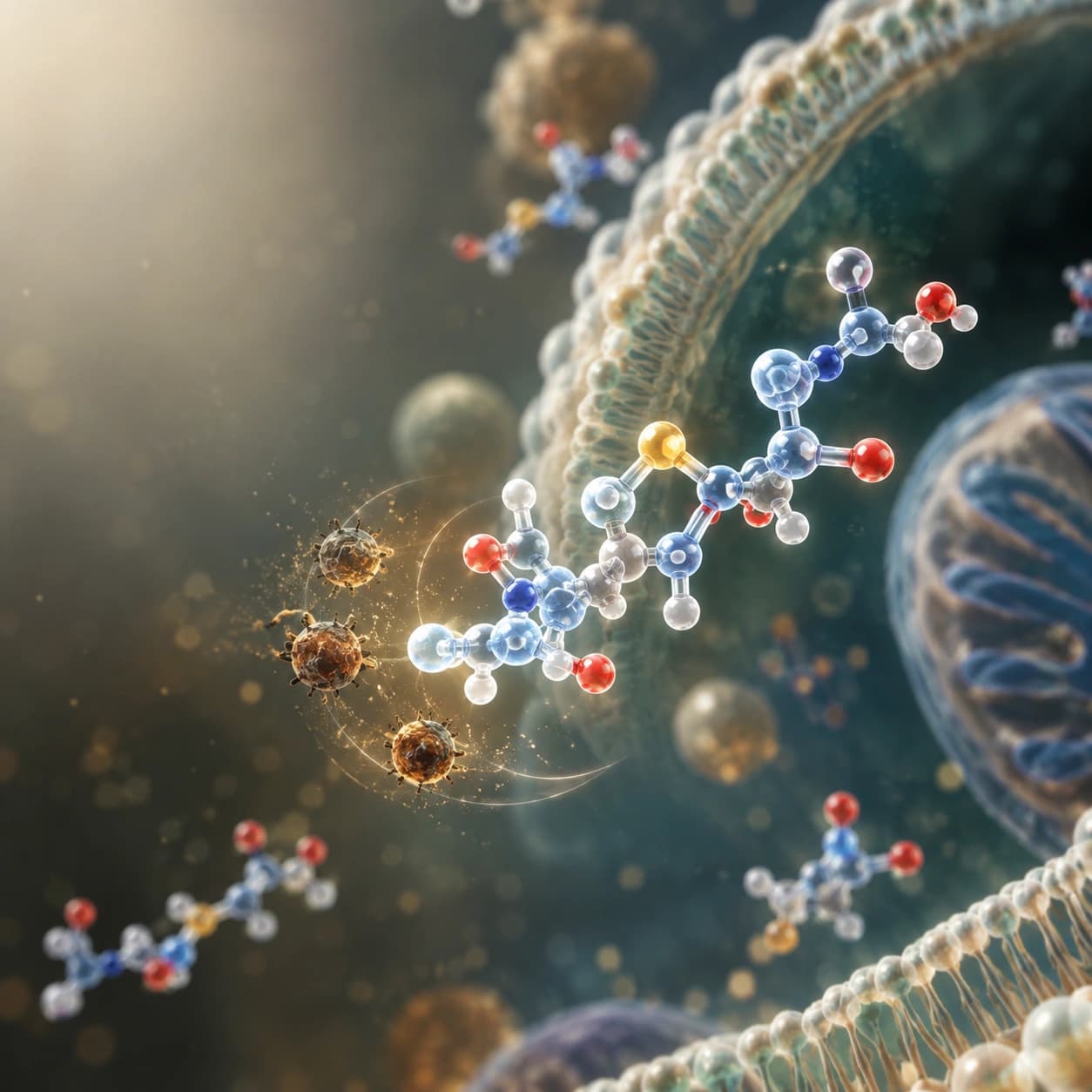
Glutathione (GSH) is often called the body's "master antioxidant," a designation that reflects its central importance in cellular redox biology. Understanding glutathione requires looking beyond simplified marketing claims.
Glutathione Structure and Function
- Glutathione is a tripeptide composed of three amino acids:
- Glutamate
- Cysteine
- Glycine
- It exists primarily in two forms:
- **Reduced glutathione (GSH):** The active antioxidant form
- **Oxidized glutathione (GSSG):** The oxidized form
The ratio of GSH to GSSG serves as an important indicator of cellular redox status.
Biological Roles
Glutathione participates in numerous biological processes:
Antioxidant Defense GSH donates electrons to neutralize reactive oxygen species and other oxidants, becoming oxidized to GSSG in the process. The enzyme glutathione reductase then regenerates GSH using NADPH.
Detoxification Glutathione conjugates with various compounds through glutathione S-transferase enzymes, facilitating their elimination.
Protein Function Glutathione participates in protein S-glutathionylation, a regulatory modification affecting protein function.
Immune Function Appropriate glutathione levels support normal immune cell function and proliferation.
Factors Affecting Glutathione Levels
- Glutathione status can be influenced by:
- Age (levels typically decline with aging)
- Nutritional status (especially cysteine availability)
- Oxidative stress burden
- Certain health conditions
- Genetic variations in related enzymes
Supplementation Approaches
Various approaches to supporting glutathione status exist:
Oral Glutathione Bioavailability of oral glutathione has been debated. Some research suggests it can raise blood levels, though the extent and functional significance continue to be studied.
IV Glutathione Intravenous administration bypasses first-pass metabolism, directly increasing plasma glutathione concentrations.
Precursor Support Providing precursors like N-acetyl cysteine (NAC) supports the body's endogenous glutathione synthesis.
Cofactor Support Vitamins C and E work synergistically with glutathione, helping regenerate the reduced form.
Clinical Context
Glutathione biology is complex and context-dependent. While research continues to explore its roles in various aspects of health and aesthetics, individual responses to supplementation vary.
Claims about guaranteed skin lightening or other specific aesthetic outcomes should be approached critically. Outcomes depend on multiple factors including genetics, overall health status, lifestyle, and the specific intervention approach.