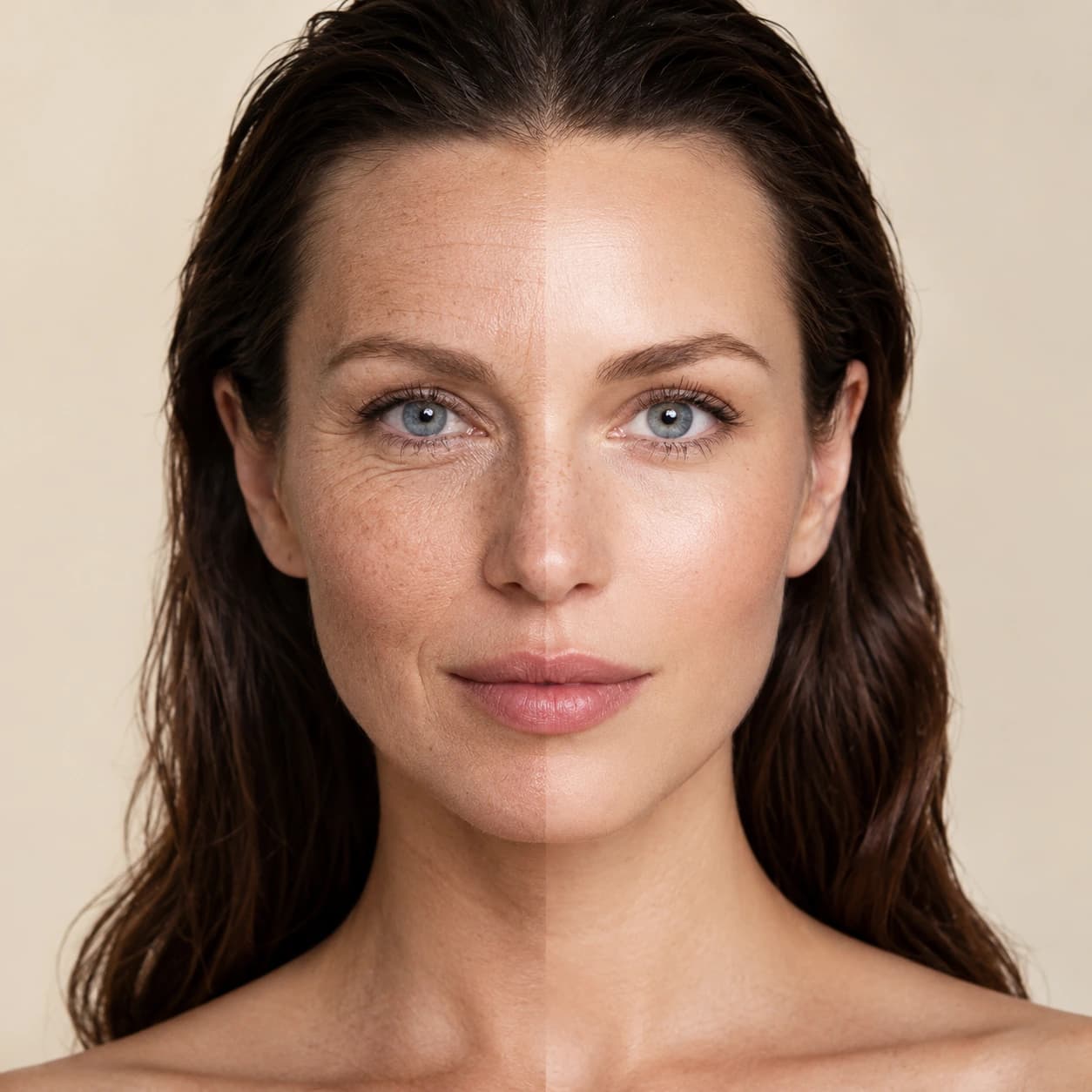
Collagen represents the most abundant structural protein in the human body, forming approximately 30% of total body protein. In skin, collagen provides the structural framework that contributes to firmness, elasticity, and overall architecture.
Collagen Structure
Collagen molecules are characterized by a unique triple-helix structure formed by three polypeptide chains. This distinctive architecture provides collagen with exceptional tensile strength.
Collagen Types
Multiple collagen types exist throughout the body, each with specific structural roles:
- **Type I Collagen:**
- Most abundant in skin
- Provides tensile strength
- Forms thick fibers
- **Type III Collagen:**
- More prevalent in younger skin
- Forms thinner fibers
- Often co-distributed with Type I
- **Type IV Collagen:**
- Major component of basement membrane
- Provides structural support at the dermal-epidermal junction
Skin contains primarily Type I and Type III collagen in the dermis.
Collagen and Skin Function
In skin, collagen serves multiple functions:
Structural Framework Collagen fibers form a dense network in the dermis, providing mechanical strength and structural integrity.
Elasticity Support While elastin fibers provide recoil, collagen fibers work in concert to maintain skin's mechanical properties.
Cell Interactions Collagen provides attachment points for cells through integrin receptors, influencing cell behavior and tissue organization.
Collagen Dynamics
Collagen is not a static structure. It undergoes continuous synthesis and degradation:
Collagen Synthesis New collagen production requires: - Adequate amino acids (especially glycine, proline, hydroxyproline) - Vitamin C (required for prolyl and lysyl hydroxylases) - Adequate cellular energy
Collagen Degradation Matrix metalloproteinases (MMPs) break down collagen. MMP activity is influenced by: - UV radiation - Inflammation - Age - Hormonal status
Age-Related Changes
Collagen biology changes significantly with aging:
- **Quantitative Changes:**
- Collagen production decreases approximately 1% per year after age 30
- Collagen degradation may increase
- **Qualitative Changes:**
- Collagen fibers become more fragmented
- Cross-linking patterns change
- The ratio of Type I to Type III collagen shifts
- **Contributing Factors:**
- Intrinsic aging (chronological)
- Photoaging (UV exposure)
- Glycation (glucose-collagen interactions)
- Oxidative stress
Collagen Supplementation
- The role of supplemental collagen peptides continues to be researched. Proposed mechanisms include:
- Providing amino acids for endogenous collagen synthesis
- Potential signaling effects from collagen fragments
- Possible effects on fibroblast activity
Individual responses vary based on age, overall nutrition, health status, and other factors. Supplementation should be considered one component of comprehensive skin health approaches, not a standalone solution.
Clinical Perspective
Understanding collagen biology helps inform various aesthetic and dermatological interventions, from topical treatments to procedures to nutritional approaches. However, skin appearance and health involve multiple factors beyond collagen alone, including elastin, glycosaminoglycans, cellular function, vascular health, and overall physiological status.